
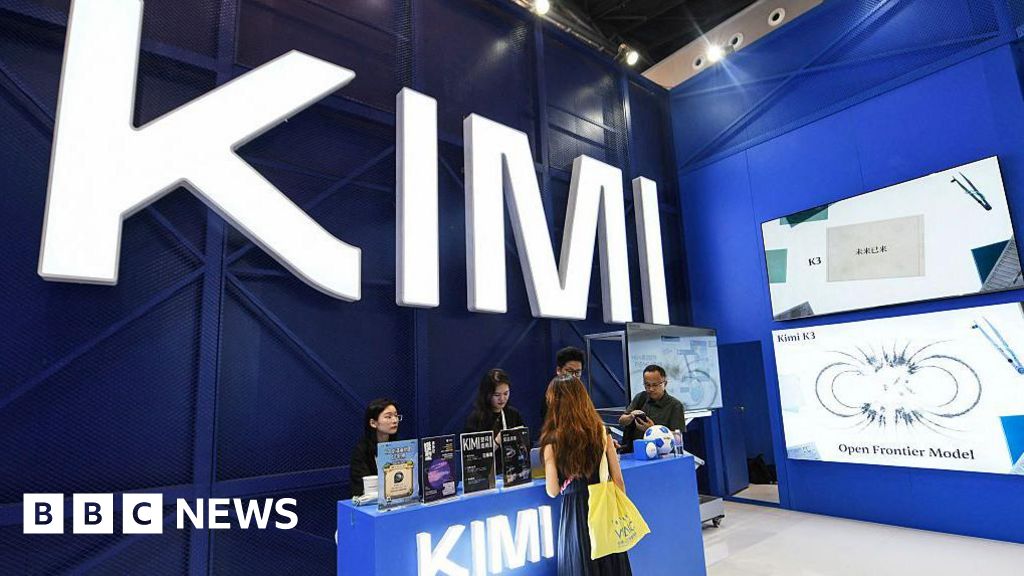
- Kimi K3 is a 2.8-trillion-parameter MIxture-of-experts model built by Moonshot AI with a 1,048,576-token context window and native vision support.
- It activates 16 of 896 experts per token using Stable LatentMoE, trades max-effort reasoning by default, and targets coding, agents, and knowledge work.
- Full open-weight release is scheduled for July 27, 2026; API access is already live at api.moonshot.ai/v1.
- Moonshot claims K3 beats Claude Opus 4.8 and GPT-5.5 on coding and agent benchmarks, while trails Claude Fable 5 and GPT-5.6 Sol overall.
Why Kimi K3 matters right now
The figure is striking at first glance: 2.8 trillion parameters, native vision, a 1-million-token context window, and an open-weight release set for July 27. But the more useful frame is who is shipping it. Moonshot AI, the Beijing-based developer behind Kimi, has positioned Kimi K3 as its most capable frontier model — and as the first open model to reach the 3T-parameter class. The July 16 launch immediately shifted competitive expectations in Chinese AI, sending competitor shares sharply lower and reopening the question: can an open Chinese model compete directly with Claude and GPT in developer workloads.
In practical terms, Kimi K3 matters because it is usable now, not months from now. The model is already available through Kimi's chatbot and the API; only the downloadable weights are delayed. For builders who want the model today, the path is through the hosted API or Kimi’s app tiers. Early developer reports suggest the coding and agent performance story is strong enough to justify testing immediately.
Architecture and training
At the model-engineering layer, Kimi K3 introduces Kimi Delta Attention and Attention Residuals alongside stable MoE routing. The backbone is a mixture-of-experts system that activates 16 of 896 experts per token. Moonshot says that pairing with Stable LatentMoE yields roughly a 2.5× scaling-efficiency gain over Kimi K2. The fine print matters. These numbers are directly from Moonshot AI's official Kimi K3 release blog, and independent reviewers have not yet had unconstrained access to training logs or reproducible divergent configurations. The architecture is real and developer-facing; the exact efficiency multiplier should be treated as a customer-facing claim until third parties verify it.
Moonshot also moved quantization-aware training to earlier in the process with MXFP4 weights and MXFP8 activations. That connective decision keeps inference costs tractable at this scale. The inference side is paired with a vLLM contribution so prefilling cache behavior can keep prices competitive even with extreme context lengths.
Functionally, what developers actually see is a model that can parse 1M tokens, interpret images natively, and default to max-effort reasoning without manual temperature wrangling. For long-repo coding, long-context contracts, or evidence-heavy research workflows, those traits are not marketing—they change what a single model call can reasonably attempt.
Benchmark claims and how to read them
Moonshot states that Kimi K3 beats Claude Opus 4.8 and GPT-5.5 on coding and general agent benchmarks, while still trailing Claude Fable 5 and OpenAI's GPT-5.6 Sol in overall standings. Market coverage from CNBC emphasized the competitive posture and noted Bank of America analysts called the release a compute-constrained scaling achievement. In contrast, BBC coverage noted independent-ranking signals from Artificial Analysis and Arena.ai, where Kimi K3 led in web-interface engineering in human-preference testing.
The caveat is who runs the harness. Developer-facing documentation at kimik3.dev lays out benchmark ranges that show Fable 5 still above K3 in some aggregate tasks, GPT-5.6 Sol at the top of the pyramid, and Opus 4.8 / GPT-5.5 below K3 on coding and agent-heavy tasks. That ordering should feel familiar: frontier models are increasingly clustered, and harness choice changes rank.
That matters when choosing whether to swap production workloads. If you accept a harness that favors coding and tool use, K3 looks very capable. If you need a model to win on broad general knowledge with no special settings, the documented placements keep K3 competitive but not dominant.
Coding, chip design, and research use cases
Benchmarks are easier to quote than the labor savings. The screenshots attached to Kimi K3's announcement trace back to long-horizon programming tasks like kernel optimization, repo-scale coding, and visual-production iterations. The same release materials cite MiniTriton—a compact compiler with tile-level IR, optimization passes, and PTX generation—and a 48-hour chip-design run on the Nangate 45nm library that closed timing at 100 MHz and simulated above 8,700 tokens/s.
These claims should be read with healthy skepticism absent reproducible test harnesses from neutral parties. But the pattern is clear: Moonshot has chosen not to launch a model that trivially beats everyone at trivia. Its messaging targets engineering productivity, not leaderboard bragging.
Pricing and availability
Moonshot has priced Kimi K3 at $3 per million input tokens and $15 per million output tokens, with cached input at $0.30 per million tokens. Those prices contradict the "half-price" framing that has appeared in secondary coverage; they are actually higher than many open Chinese competitors. Cost reporting from secondary coverage highlighted higher pricing versus Chinese open-weight peers, with an estimated task cost near $0.94. That may be acceptable for developer work where upstream cost is minimal compared with engineering time; it is less comfortable for high-volume inference service.
Availability is broader than pricing might suggest. The model sits inside the Kimi app, Kimi Work, Kimi Code, and the API today. Full downloadable weights are the timetable item, not today's release; the July 27 window is a commitment point.
Regulatory and market reaction
The release arrived with an obvious geopolitical undercurrent. BBC reporting highlighted US export-control and national-security narratives, noting US lawmakers debating Chinese-model adoption in US companies. That discussion is not solely about Kimi K3. Even though residents in some Western jurisdictions have historically had limited access to the Kimi chatbot web app, the open weights and API fundamentally distribute access through alternatives. Market reaction was sharp but localized: shares of Zhipu fell roughly 27 percent and MiniMax about 16 percent following the launch, according to market reporting. That is competitive damage inside the same investor base, not a technology event in isolation.
For practitioners in the United States, the reality is simpler: developer use still proceeds through the API endpoint and GitHub-accessible artifacts; direct consumer account access to the Kimi chat interface remains inconsistent outside broader Asia-Pacific markets. That regulatory seam is temporary; downloadability on July 27 will matter far more than today's consumer portal.
The developer verdict
It is genuinely useful because of context length, the open-weight timeline, and the developer workloads Kimi has documented. It is also undeniably risky to rely on a frontier model whose benchmark advantage is strongest on its own settings and task-level selection right after launch.
If your workflows revolve around long-repo coding, long-document synthesis, or visual reasoning at scale, K3 deserves an API key this quarter. If you need deterministic general knowledge or are cost-sensitive on inference, keep Claude or GPT in the loop until open-weight testing clarifies performance and fine-tuning economics.
The smart approach is to treat Kimi K3 as a parallel harness rather than a wholesale replacement. Test it for researcher loops, coding agents, long-form evidence extraction, and visual tasks. Keep mature APIs for anything requiring audited governance or where your pricing contract already fits your scale.
You can join the early developers already testing Kimi K3 through the API now, then verify open-weight behavior yourself on July 27 once the full release is downloadable.
Conclusion
Kimi K3 is one of the most technically interesting frontier releases of 2026 so far: an open-weight model with frontier context length, strong developer-focused performance claims, and an API already in use today. How it should fit into your stack depends on your tolerance for trade-offs between pricing, benchmark variability, and governance posture.
Frequently asked questions
What is Kimi K3?
Kimi K3 is a 2.8-trillion-parameter MoE model built by Moonshot AI with a 1,048,576-token context window, native vision, and an API already available at api.moonshot.ai.
When will Kimi K3 be open source?
Full open-weight release is scheduled for July 27, 2026, while API and web app access already exist today.
How does Kimi K3 compare to Claude and GPT?
Moonshot says K3 outperforms Claude Opus 4.8 and GPT-5.5 on coding and agent tasks, but still trails Claude Fable 5 and GPT-5.6 Sol in overall benchmarks.
Related Reads
- Kimi K3 Unleashed: Moonshot AI's 2.8 Trillion Parameter Open Frontier Model
- GPT-5.6 Sol, Terra & Luna: OpenAI's Government-Gated Frontier Models
- MiniMax M3 Explained: The Sparse Attention Breakthrough



0 Comments